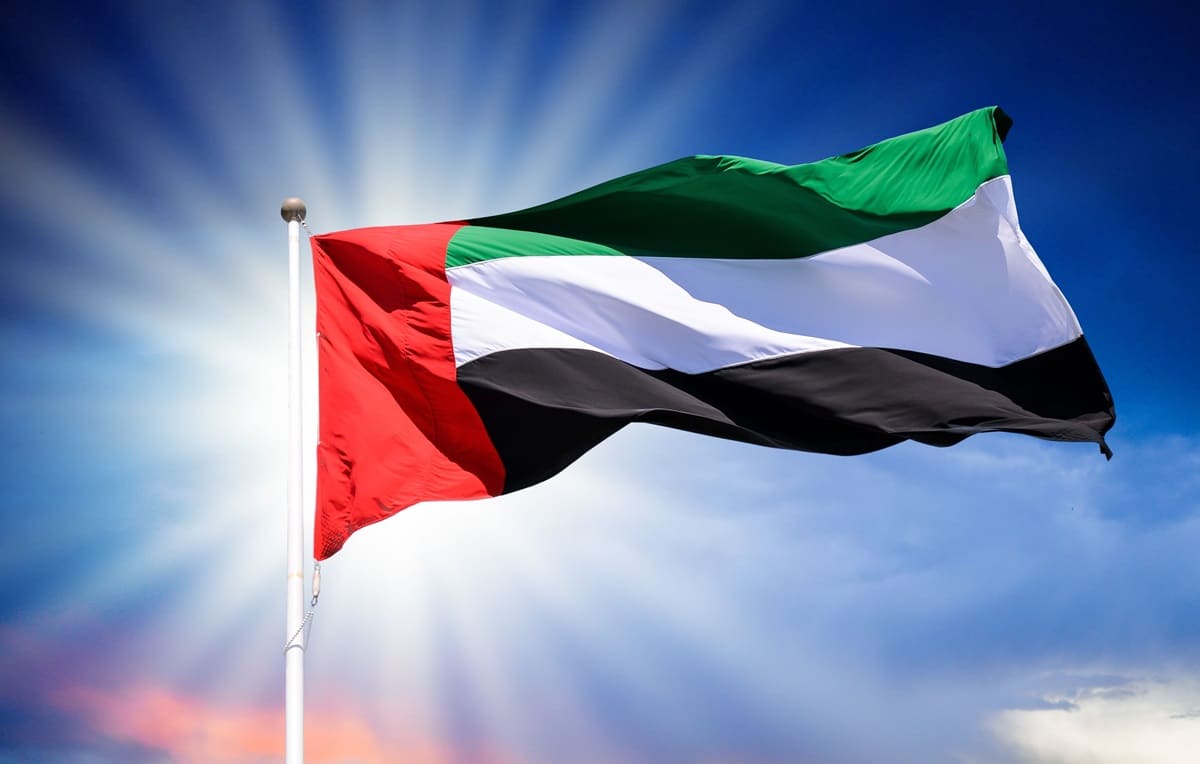
The new Decree-Law allows the use of industrial hemp in several industries, including textiles, construction, paper and packaging, as well as the production of legally approved medical products, while imposing strict controls and prohibitions to prevent misuse.
The Decree-Law expressly prohibits the personal or recreational use of industrial hemp.
UAE hemp laws
This includes the importation, production, or use of industrial hemp products related to food products, food additives, animal products, tobacco products, and any other products specified by Cabinet decision.
It also prohibits the import, production, or use of cosmetic products containing industrial hemp, except for those containing oil extracted from industrial hemp seeds or stems, or other exceptions determined by Cabinet decision.
Any compounds that may directly or indirectly produce a narcotic or psychoactive effect are subject to the provisions of the Decree-Law, criminal and penal laws, anti-narcotic laws, and other related laws.
Taking into account prohibited legal and criminal uses, the Decree-Law applies to all industrial hemp-related activities carried out within the UAE, including free zones.
Covered activities include the import and export of industrial hemp seeds, their cultivation in fenced, guarded, and protected areas, transportation, disposal of seeds and seedlings, and the production, import, export and trade of hemp-based products as authorized under the Decree-Law.
Each emirate is empowered, within its jurisdiction and in accordance with local laws, to prohibit or restrict any activity related to industrial hemp. In such cases, the penalties specified in the crime control, drug, and other relevant laws will apply.
Medical use is allowed for the first time
For the first time, the Decree-Law allows the use of industrial hemp in medical products containing hemp compounds or raw materials derived from hemp, subject to regulation under the Law on Medical Products, Pharmacy Professions and Pharmaceutical Industries.
The Decree-Law authorizes obtaining a license from the Ministry of Climate Change and Environment to import and export industrial hemp seeds, as well as fulfill the permit requirements of the relevant local authorities.
The main conditions of the licenses include that the applicants must have licensed agricultural companies, the seeds must come from approved industrial hemp varieties listed in the administrative regulations, and the imported seeds can be used for planting in designated areas approved by local authorities and in licensed areas.
The cultivation of industrial hemp is prohibited without a license from the Ministry of Climate Change and the Environment and permission from the relevant local authorities. Farmers must also obtain a security clearance from a committee under the National Anti-Narcotics Authority.
Selected areas
Licensed growers must comply with designated cultivation areas, production limits, and periodic testing throughout the production cycle to ensure that tetrahydrocannabinol (THC) levels do not exceed 0.3 percent. Any excesses should be reported to the Minister of Climate Change and Environment, the relevant local authorities, and the National Drug Enforcement Agency.
The Decree-Law regulates the allocation of designated agricultural areas, which must be protected, fenced, leased, and separated from residential and other agricultural areas.
Employees must obtain a security clearance, and the premises must meet the security requirements set by the National Anti-Drug Committee and the competent local authorities.
Planting in natural areas or protected areas is strictly prohibited.
Manufacturing and trading
The disposal of industrial hemp seeds and seedlings is regulated under approved contracts and cannot be done by unauthorized persons.
The transportation of seeds and seedlings is prohibited without permission from the competent municipality. When transportation takes place across one emirate, permission must be obtained from the relevant authorities involved.
The production of industrial hemp products is prohibited without a license from the relevant local authorities following approval by the Ministry of Industry and Advanced Technology.
Licensing requirements include obtaining all necessary permits prior to commencing operations, ensuring that products are listed on an approved list, implementing an approved quality management system, and adopting an electronic documentation system linked to a national traceability system.
Factories must also maintain separate areas for raw materials, manufacturing, packaging, storage, waste management and transportation.
Licensed producers must ensure that THC levels do not exceed 0.3 percent, avoid trading with unlicensed companies, conduct periodic inspections, and notify the authorities of any excesses.
Importing hemp products
Importing or exporting industrial hemp products requires a license from competent domestic authorities and prior approval from the Ministry of Foreign Trade, as well as all necessary security clearances.
Licensed commercial products containing industrial hemp compounds must provide clear labeling, including the industrial hemp logo, licensing information, compound concentration, indications for use and contraindications, and potential adverse effects.
With permission from license holders, industrial hemp seeds, seedlings, or products may be used for scientific research under strict control specified in administrative regulations.
Applicants must be at least 21 years of age, of good moral character, legally competent, and have no relevant convictions unless legal standing has been reinstated.
Licensees must keep detailed records for at least five years and must not provide licensed activities under contract or provide false or misleading information.
National tracking system
The Decree-Law authorizes the establishment of a National Tracking System for industrial hemp seeds, seedlings, and products, with the governance defined by the Cabinet decision. An integrated electronic registry will be created by the Department of Climate Change and Environment to record all license data, accessible to designated federal and local authorities.
Licensing authorities, the National Anti-Narcotics Authority, and local law enforcement agencies are empowered to monitor and inspect licensed operations to ensure compliance.
Penalties for violations
Without prejudice to severe penalties under other laws, the Decree-Law imposes criminal penalties including imprisonment of not less than three months and fines of not less than AED100,000 ($27,225) for violations such as unauthorized work, misuse, unauthorized disposal or transfer, prohibited or permitted personal use, prohibited personal use.
Additional penalties apply for failure to perform mandatory inspections, violations of traffic laws, or lack of cooperation during an investigation.