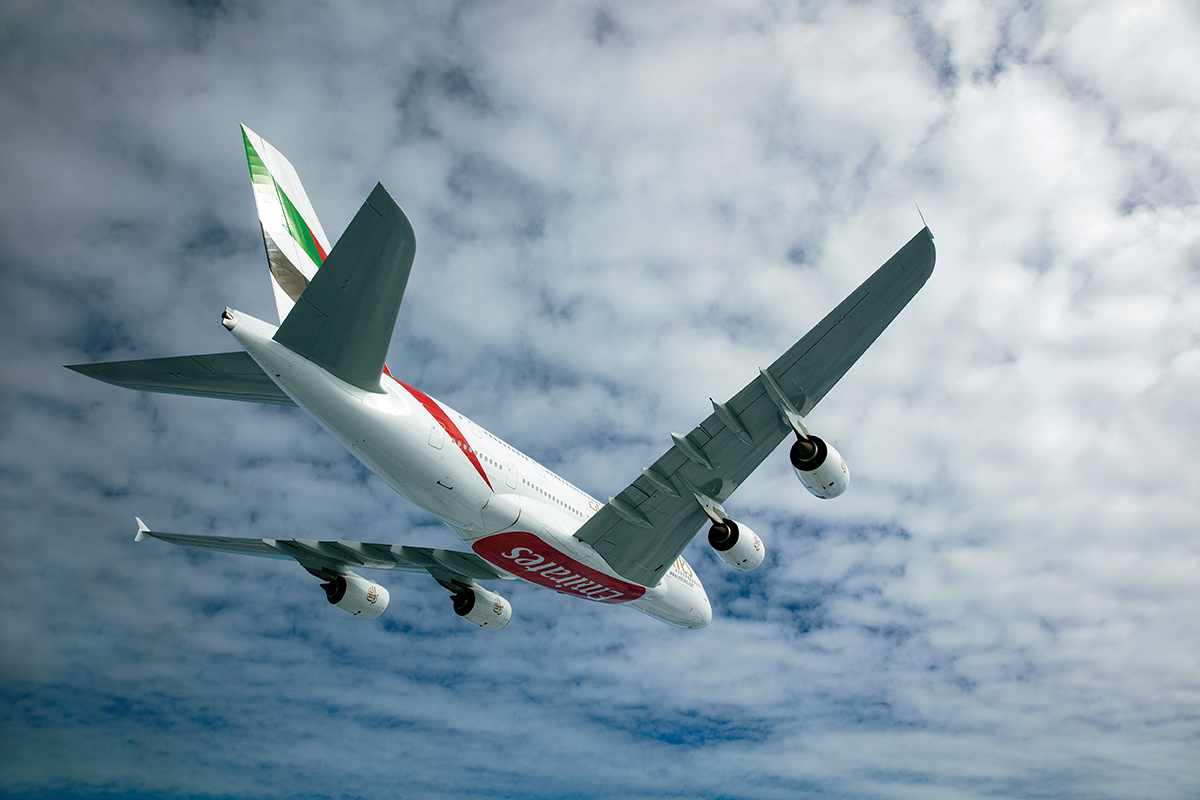
The UAE’s aviation sector has strengthened its position as one of the strongest pillars of the country’s economy, marking a year of policy progress, continued leadership and increasing global impact by 2025.
According to the Emirates News Agency, the sector has continued to consolidate its position as a global symbol of governance, innovation and sustainable growth. Its direct and indirect contribution reached 18 percent of the gross domestic product, reflecting its important role in supporting trade, tourism, transportation and supply chain, along with broader economic competitiveness.
One of the first events of the year took place in January, when the General Civil Aviation Authority launched a unified national platform for unmanned aerial vehicles. The interactive digital system was designed to control and register drone operations, define usage requirements and ensure compliance with laws and regulations. The platform also aims to improve the safety, efficiency and overall investment climate.
In April, the GCAA granted Design Approval for the country’s first hybrid aircraft at the Abu Dhabi Cruise Terminal at Zayed Port. The facility is part of the Abu Dhabi Air Taxi project and represents a step towards integrated and sustainable air transport solutions across the emirate.
UAE airlines lead steady growth
Environmental sustainability remained a priority throughout the year. The GCAA has submitted the third draft of the UAE National Action Plan to Reduce Aviation Emissions to the International Civil Aviation Organization after receiving Cabinet approval. The program was developed in collaboration with stakeholders in the aviation sector to support the UAE’s global climate commitments while ensuring sustainable economic growth.
The updated presentation reflects the country’s stance on climate action and its commitment to international obligations under ICAO Assembly Resolution A37-19 (2010) and subsequent resolutions. Adopt a comprehensive “basket of measures” to reduce aviation emissions, including 42 projects focused on performance and technology, and 13 projects related to sustainable aviation fuel and low-carbon fuels.
On the international front, the UAE has secured a seat on the ICAO Council for the seventh consecutive term. Hamad Salem Al Muhairi, Assistant Director-General of Aviation Safety Affairs at GCAA, has been re-elected as the Chairman of the ICAO Aviation Safety Panel for three consecutive years. Engineer Maryam AlBalooshi was also elected as the Chairman of the Aviation Environmental Protection Committee, becoming the first person from the Middle East to hold this position.
The UAE has also strengthened its role as a global center for aviation dialogue by hosting major international events, including the ICAO Global Implementation Support Symposium and the launch of the “Global Sustainable Aviation Market” program in Abu Dhabi. The ICAO Council later adopted this initiative as an annual event under its official calendar.
Passenger traffic continued to rise, with Abu Dhabi, Dubai International Airport and Sharjah International Airport handling 108.59 million passengers in the first nine months of 2025.